

Lessons from farming and agribusiness systems across the five continents

By Fabio Pereira, Director, PwC Brasil, Agribusiness Center of Excellence
As I move through different innovation ecosystems around the world, one point becomes clear: the way agribusiness value chain is organized, changes significantly across territories, directly influencing both the criteria and the pace of technology adoption.
Each country, and often each region, develops its own solutions based on local conditions, such as land availability, demographic profile, infrastructure, regulatory environment, agricultural and production management to name part of the list.
Recently, I had the opportunity to visit production environments across the Netherlands, Kenya, the United States, Japan, Australia and New Zealand. These journeys sparked a reflection I would like to share in this article: what do global innovation ecosystems reveal about the future of agribusiness and what synergies can emerge between them?
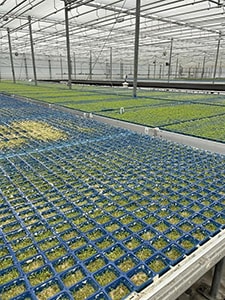
Netherlands
- Technological efficiency does not guarantee sustainability: The Dutch model shows that high productivity, with inputs sourced externally and applied in confined areas, can intensify negative externalities for soil health, requiring additional attention to the sustainability of the surrounding environment.
- Technological dependence can create production risk: Highly automated operations, while efficient, can also be fragile. When one component fails, the entire production can stop, exposing farmers to operational and financial vulnerabilities.
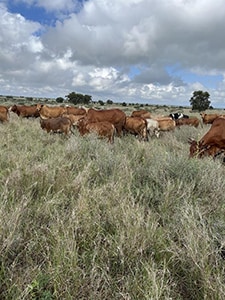
Kenya
- Production and preservation must go hand in hand: The case of Kenya shows that when agriculture and nature share the same space, productivity depends on balance. Expanding agribusiness requires careful management of natural resources (soil, water and biodiversity) to avoid short-term gains compromising long-term productivity.
- Technology can be a shortcut to development: In emerging countries like Kenya, digital technology tends to be more disruptive, as it allows systems to “leapfrog” traditional stages. The historical absence of infrastructure opens space for more direct adoption of efficient and less asset-heavy solutions.
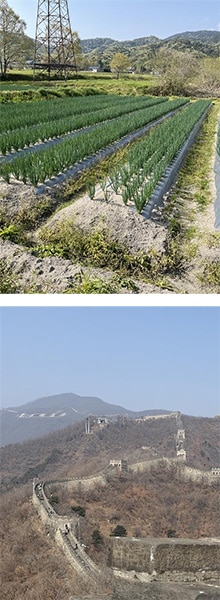
Japan
- Balancing tradition and adaptation is essential in a changing world: Japan highlights that increasing openness to innovation within the farm gate is just as important as preserving cultural heritage and knowledge accumulated over generations. Otherwise, the pace of technological adoption in agriculture may slow down.
China
- Scale requires systemic coordination: In China, production growth is less driven by land expansion and more by the ability to coordinate technology, management and public policies, allowing incremental productivity gains to generate significant impacts over time.
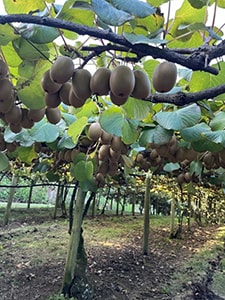
New Zealand
- Results can be achieved through balance: New Zealand shows that high performance in agribusiness can be achieved through simpler and more sustainable production models that respect natural limits and avoid excessive intensification. Whether in dairy, more volume-oriented, or kiwifruit, focused on value, the country demonstrates that combining thoughtful use of technology with efficient resource management is key to long-term competitiveness.
Australia
- Value is also built beyond the farm gate: Australia highlights the importance of developing a competitive advantage supported by narrative and positioning. Over the years, the country has added value through branding, traceability and stronger connections with consumers. The lesson is that margins also come from perception, not only from efficiency.
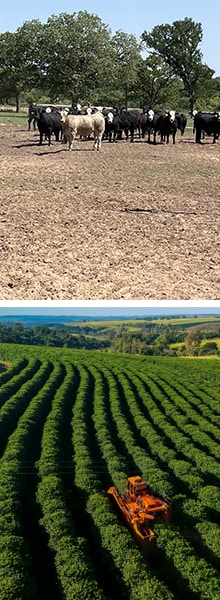
United States
- Short-term efficiency does not always guarantee long-term resilience: The U.S. model shows the value of analytical, cost-benefit-driven management, while reinforcing the need to balance economic pragmatism with a longer-term strategic view.
- Technology adoption is also driven by economic incentives: In the U.S., the diffusion of agricultural technologies is deeply connected to market dynamics. The country shows that stakeholder coordination moves the technology needle, not just necessity.
The Brazilian experience
- The analysis of international experiences indicates that high-performing agribusiness innovation ecosystems are those that ensure economic and operational sustainability over time. This involves integrated coordination among different stakeholders across the entire value chain, from farm to consumer, with structured collaboration mechanisms to address systemic challenges. Brazil stands out as a strong case and benchmark, as this collaboration happens in practice.
- Since the 1970s, the country has developed the foundations of tropical agriculture through a combination of public policies, private sector engagement, continuous investment from universities and the role of Embrapa in building human capital with international technical expertise. This joint effort has consolidated an environment conducive to innovation and value creation for global agribusiness chains.
Netherlands: technology pushed to the limits of efficiency
The Netherlands, maybe one of the most emblematic examples of high technological agriculture operating under extreme spatial constraints. Along the visits, I saw greenhouses where the first level was designed with sufficient height to allow future vertical expansion — a clear sign that growth was being anticipated from the outset.
These large-scale greenhouses rely on advanced technologies for temperature control, lighting, and crop management, enabling the production of vegetables and herbs at very high-quality standards. What stood out most to me was how quickly these products reach consumers. Once harvested and packaged, they travel very short distances before arriving on retail shelves that supply millions of inhabitants across Europe.
The same level of sophistication is found in dairy farming. Some operations are run by just two people, supported by fully automated milking systems that deliver high levels of precision, efficiency and added value. Artificial intelligence no longer appears as an experimental tool but as part of everyday production processes — especially in horticulture, eggs, pork and dairy.
The high level of sophistication also brings its own paradoxes. Heavy reliance on technology requires specialized technical support, access to spare parts and deep expertise in engineering and mechanics. When one component fails, the entire operation can come to a halt, a risk inherent to full automation. Add here a complex regulatory environment and it often comes to challenge the pace of innovation.
Kenya: a singular coexistence of wildlife, agriculture and digital solutions
The first impression upon arriving in Kenya felt like looking at Brazil many years ago, although the tropical weather. The productive base is still largely shaped by subsistence agriculture, low levels of technology adoption and limited use of biotechnology. Infrastructure is constrained, yet labor is abundant, creating context where productive potential is evident, even though significant challenges remain, particularly in connectivity and technical training.
That initial sense of familiarity quickly gives way to a truly singular experience. In some of the regions visited, agricultural production takes place in direct coexistence with wildlife. Elephants, giraffes and antelopes share the territory with cattle, while predators such as cheetahs and lions are part of the surrounding environment.
Managing pasture under these conditions involves decisions that extend well beyond productivity. It requires balancing ecosystem conservation with herd safety. During the day, grazing follows its usual rhythm. At night, livestock enclosures are guarded, with workers on constant watch.
This reality becomes even more interesting during nighttime safaris. After dark, wildlife moves freely and at a relatively short distance the lights of the city remain visible. The image helps frame the country’s productive context: a territory where agriculture, nature, and urban life coexist in continuous negotiation.
From an agricultural standpoint, Kenya relies primarily on staple crops aimed at domestic consumption. Regarding livestock production, an international opportunity, with particular emphasis on the Boran zebu breed, recognized for its hardy genetics and high-quality beef. The protein market is indeed predominantly domestic, but exports of Boran genetics are growing to other African countries and to Latin America.
Moving between rural areas and cities, another aspect quickly draws attention: the strength of digital solutions, especially in financial transactions. Kenya ranks among global leaders in digital payments and mobile money usage, driven by the widespread adoption of the M-Pesa system — even for everyday street level purchases.
Japan: innovation within long-established traditions
If in Kenya the mobile phone often replaces physical cash, in Japan the yen rarely leaves people’s pockets. In this highly developed country, cash remains part of daily life. This detail does not define Japan, but it helps situate the relationship between innovation and tradition — two forces that move side by side, including in rural areas.
Highly organized, Japan’s productive landscape is deeply shaped by long-established tradition, and this structure is closely connected to the profile of those working in agriculture. The average age of Japanese farmers is around 65, one of the highest in the world. Labor shortages make technology essential to sustain agricultural activity, but adoption tends to be gradual. This is reflected in the presence of machines equipped with embedded technology that often operate in isolation, without connectivity.
In agriculture, farms are often small and fragmented, with land availability limiting mechanization and making consolidation more challenging. Production is largely family-based, focusing on rice, vegetables, and other staple foods for domestic consumption. To complement this supply, Japan relies heavily on imports, including wheat flour, corn, soybeans, pork, poultry and even fish.
While sushi may be the first image that comes to mind when thinking about Japan, it is the imposing presence of Wagyu cattle that stands out on farms. Raised in closed, highly controlled systems, under strict genetic standards and full traceability, Wagyu holds a prominent place in Japan’s premium beef market. Herd sizes that might be considered small elsewhere — such as 50 or 100 animals — are already significant in this context. This is a premium segment associated with special occasions and refined culinary experiences, where quality and added value matter far more than volume.
China: long-term vision and execution at scale
Still in Asia, China shows how tradition, planning and the future can connect in practice. The Great Wall is perhaps one of the first images that comes to mind when we think of the country. For its time, it was an extremely advanced construction in terms of engineering, organization and strategic vision. More than a historical monument, it helps translate a characteristic that remains present in China: the ability to plan for the long term and execute at scale.
In agribusiness, this logic appears in the way food security, productivity and innovation agendas are structured. The visit to the Jingwa Innovation Center in Pinggu, China Agricultural University and the China International Crop Protection Exhibition showed an ecosystem that brings research, public policies, companies and the market closer together with an applied focus. There is still relevant room to advance productivity through technology, management and innovation. In a system of this scale, small gains can generate significant impacts and, over time, strengthen agricultural production and reduce external dependencies.
Australia: scale in the field, value beyond the farm
In Queensland, northeastern Australia, the landscape resembles Brazil in many ways: vast areas, warmer climates and production systems typical of tropical regions, forming a productive environment designed to operate across long distances while dealing with climate variability.
In livestock production, this setting is reflected in systems that combine extensive grazing with feedlots, placing strong emphasis on operational efficiency and the reuse of manure as biofertilizer. In agriculture, cotton production in Goondiwindi, in inland Queensland, stood out to me as an additional layer of this integrated model. The combination of irrigation technology and water management has enabled a highly technological operation capable of reshaping the region’s economic dynamics.
During one of the visits, I met a cotton producer who took this integration beyond the farm itself. Part of the output is transformed into a proprietary clothing brand, with full traceability from the field to the final product. By telling the story of the raw material and its origin, the producer adds value, builds identity and brings consumers closer to the agricultural reality behind what they wear.
New Zealand: a different perspective, a different pace
In New Zealand, the part of agribusiness I had the opportunity to experience operated at a very different pace. The day began early in the pasture, with milking taking place once daily, between 5:00 and 7:00 a.m. On that farm, two people were enough to run the entire operation, and the farmer did not work full time on the property. Once milking was finished, the priority was to arrive on time for work or other activities, often in the city.
The production system is simple and clearly defined, organized to operate on a medium scale, as cattle are raised on pasture. This experience helps illustrate how, in certain contexts, agriculture can be integrated with other economic activities and follow a different rhythm of life.
Beyond dairy, another standout in New Zealand is kiwifruit production. In the case of the “gold” variety, the business model is based on intellectual property rather than on commodity logic. This approach allows substantial value to be added through branding, pricing strategy, and market positioning, generating additional income for farmers through value sharing mechanisms. It is a model that requires deeper integration across the value chain to serve a more demanding consumer willing to pay a premium for differentiation.
United States: scaling premium through standardization
After exploring different ways of producing and organizing agribusiness, in the United States scale translates into the ability to turn quality into a standard. One of the clearest examples can be seen in premium beef. Breeds such as Angus and Hereford are raised in large feedlots, supported by certification programs and strict protocols for quality assurance and carcass control.
Over time, this model has allowed high-quality beef to move beyond niche markets and become accessible to a broader base of consumers, including through major retail chains. In this context, premium is not an exception, but the result of standardized processes designed to deliver consistency.
Similar logic applies to dairy farming. In Texas, one operation that stood out was a farm with around 5,000 lactating cows, equipped with a rotary milking system and infrastructure designed to sustain high-demand operations. The entire setup revolved around standardization, consistency, and scale, ensuring reliable and uniform quality output.
At the same time, this farm also operates an almost artisanal production model, such as milk sold in glass bottles — the well-known returnable jars. Consumers go to the store, pick up the product, return the container, and build a direct connection with the brand, the origin, and the story behind that food. This contrast helps explain American agribusiness. Scale and niche coexist in harmony, not as opposites, but as complementary strategies shaped by the preferences of U.S. consumers, who seek traceability and drive continued investment in technology.
Back to Brazil… what connects innovation ecosystems?
Across all the countries I visited, regardless of technological level or production model, one element consistently appeared: people willing to collaborate. Farmers and professionals are open to exchange, curious and receptive, ready to share stories, challenges and lessons learned.
Looking across different agribusiness innovation ecosystems around the world, it becomes clear that each context brings its own challenges and opportunities. Still, they all share a common commitment to progress driven by collaboration.
The diversity of solutions, rhythms and productive cultures suggests that the future of agribusiness will depend not only on technological advancement, but on the ability to connect tradition, innovation and human relationships — building a more sustainable, efficient and globally integrated agricultural and livestock ecosystem.
.jpg)
Fabio Pereira is a director at PwC Brazil. Based in São Paulo, he leads the Agribusiness Center of Excellence in Technology and Innovation. He has 25 years of experience in agribusiness, working in asset valuation for mergers and acquisitions, market access strategy, digital technologies, markets indicator analysis, innovation ecosystem, sustainability, among other consulting projects. He is one of Brazil's representatives in the Nuffield International Farming Network's Global Agribusiness Research Program 2025, focusing on climate risk management.
Contact us